
Have you gone into the kitchen late at night and turned on the light to be greeted by a few cockroaches scurrying away? Freaked out? What’s the best treatment to kill cockroaches?
How Conquer treats cockroaches in your home – proven results
- Apply a special gel bait to wet area cupboards – bathroom, kitchen, laundry
- Apply a dust treatment under large appliances such as the dishwasher, fridge, washing machine etc
- Dust in cracks and crevices where cockroaches like to harbour
- Dusting application to your roof void through the manhole
- Spray skirting boards with a low-odour residual chemical that only targets insects and is completely safe for pets and humans
Effective cockroach control isn’t about spraying more – it’s about treating the right areas, in the right way, at the right time.
How to prepare and how to treat cockroaches
-
Before your cockroach treatment, a few simple steps can help maximise results:
-
Empty kitchen and bathroom bins and ensure lids are closed
-
Clear food scraps and wipe benches where possible
-
Remove items from inside cupboards being treated
-
Vacuum floors and corners where activity has been noticed
-
Clear obvious cracks and crevices where cockroaches harbour
-
Reduce cardboard storage where possible
-
Your technician will let you know if anything else is required on the day.
Why cockroaches are a problem
Cockroaches contaminate surfaces, food, and storage areas as they move through the home. They can spread bacteria and allergens and are known to trigger asthma and allergic reactions, particularly in children.
Because they hide and breed in concealed areas, visible cockroaches often indicate a much larger unseen problem – which is why professional treatment is important.
Non chemical methods of prevention and control of cockroaches
As cockroaches living in and around buildings require food, water and shelter sites, reducing the availability of resources will likely lead to reductions in population size. The following practices will make buildings less suited to infestation:
1. Clean-up after food handling should be immediate, thorough and regularly carried out. Dishes and utensils should not be left unwashed overnight. Pets’ feeding bowls should not be left unwashed for periods. Clean-up of offices, clubs, bars, and so on should, where possible, proceed immediately when the day’s activities are finished, so that food contaminated surfaces are not available overnight.
2. Water availability should be reduced where possible. Unnecessary containers with water, accumulations of water from cleaning activities, leaky taps or pipes should all be checked.
3. Foods should be stored in tight cockroach-proof containers. Cereals, flours, meats and all other food materials should be kept in a refrigerator or in containers that can be tightly closed.
4. Food storage involves:
– inspection of incoming stock;
– regular stock rotation;
– sound food-storage practices, whereby food is stored above ground level and, where appropriate, away from contact with walls.
5. Garbage should be stored in tightly closed containers.
6. Where feasible, cracks and crevices that may harbour cockroaches should be filled in. Entry points (eg around pipes) through floors or walls should be blocked off to lessen the possibility of re-infestation or harbourage.
7. Equipment in food-handling areas should, where possible, be located above floor level to facilitate easy and thorough cleaning and thus avoid the build-up of wastes underneath.
8. Reasonably regular clean-up of ‘longer term’ build-up of waste foods (eg grease accumulation around stoves and vents, or spilt food materials at backs of shelves) should be carried out. Vacuuming of shelves and cupboards will reduce the build-up of food particles in cracks and crevices. Usually, a thorough survey of the building will reveal the extent to which practices and procedures need to be modified. Where very poor sanitation and hygiene practices exist, chemical treatments will be limited in their effectiveness.
Types of cockroaches found in Brisbane’s homes
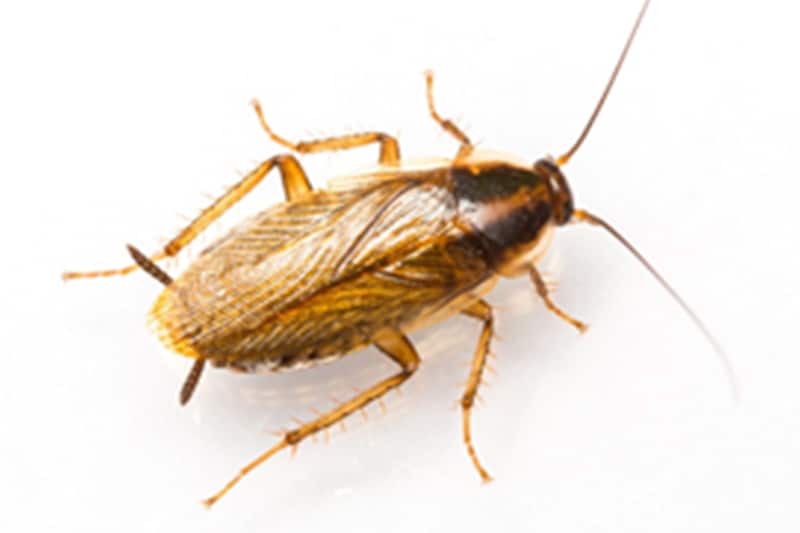
German cockroaches (Blattella germanica)
These are the cockroaches that get crazy numbers in your kitchen. They have a very rapid breeding cycle and can multiply their population in a few weeks.
They prefer a warm, moist area and are frequently found in kitchens and bathrooms. They are tan or light brown coloured with two dark parallel streaks running from the head to the base of the wings. They are 1.2 to 1.5 cm in length when adult.
Female cockroaches carry their ootheca with them during the germination rather than depositing it like other species. They have wings but don’t take to flight.
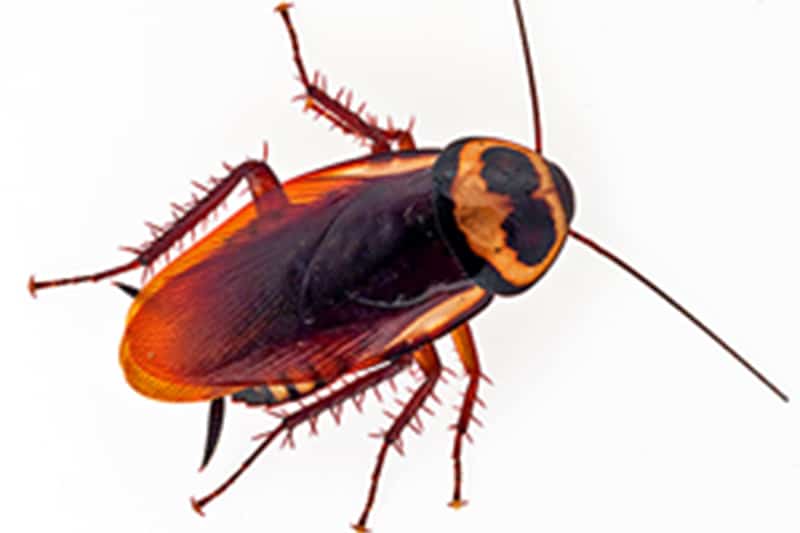
Australian Cockroaches (Periplaneta australasiae)
These are the scary cockroaches that crawl into to your home at night from the outside. Unlike other cockroaches, they normally feed on plants and feed on different organic substances, including decaying substances. They don’t normally harbour in your house.
Australian cockroaches are a large species of cockroaches. They are winged and can be about 3 to 4 cm in length. They are dark brown in colour.
Australian cockroaches are very similar to American cockroaches but can be distinguished by a yellow margin on the thorax and yellow streaks on the sides near the wing base.
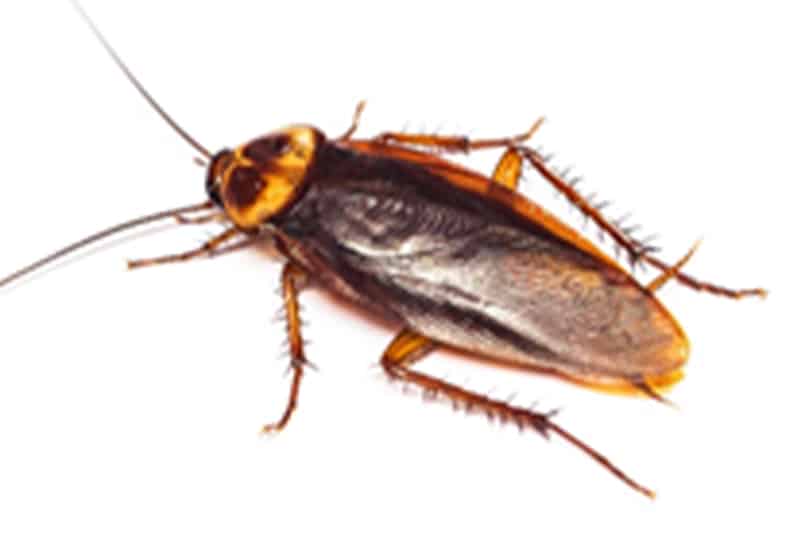
American Cockroaches (Periplaneta americana)
These are the big scary cockroach that flies into your face at night and scurries over your pet feeding bowls.
They are large roaches, ranging in length up to 4 cm. They prefer dark, moist, warm areas like sewers and drains. They are also commonly found in basements, steam tunnels, boiler rooms, rubble foundations, and similar places.
Often, they aren’t even noticed until a light is turned on, and they dash away rapidly. Both sexes have working wings and at least some flight capability, but oddly enough, they seldom fly.
Brownbanded Cockroaches (Supella longipalpa)
These cockroaches can survive a long time without access to water. Compared to other common roaches (such as the German cockroach), they prefer drier conditions. They’re commonly found in bedrooms (especially in cabinets and night tables), in closets, behind peeling wallpaper, and inside electrical and electronic equipment.
They are 1.5 cm in length as adults. Adults of both sexes have wings, although only males fly. Brown-banded cockroaches have two light-coloured bands running across the base of their wings, hence the name “brown-banded cockroach”.
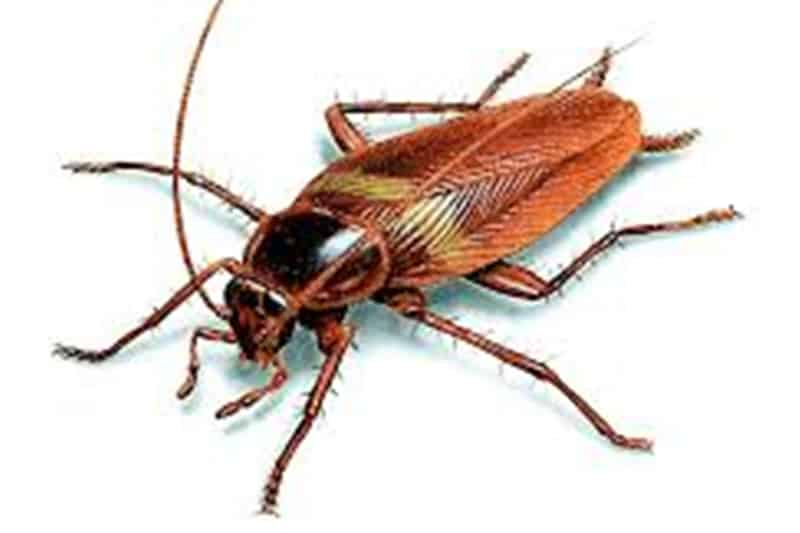
Oriental Cockroach (Blatta orientalis)
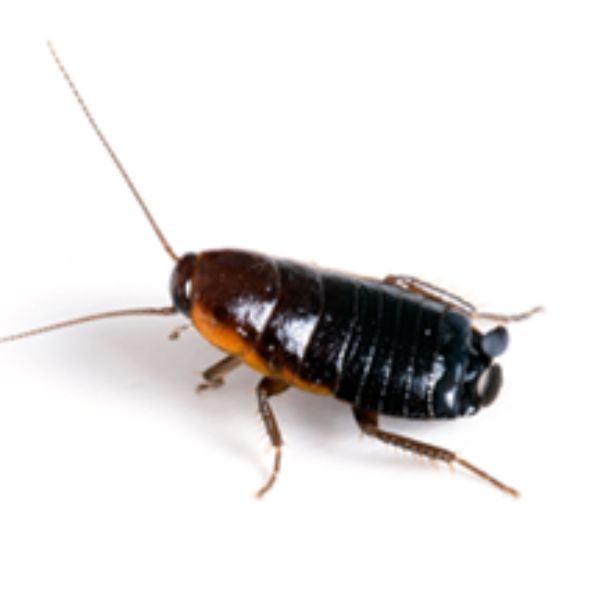
Dark brown to black. Female has much-reduced wings size, present as wing buds. Male has wings that usually cover most, but not all, of the abdomen. 2 to 2.5 cm.
Prefers relatively cool conditions. May infest indoors or outdoors. It may be found in cool, damp cellars and subfloors, around drains, inside walls, in and around equipment, under garden debris, in dumps etc. Does not fly.
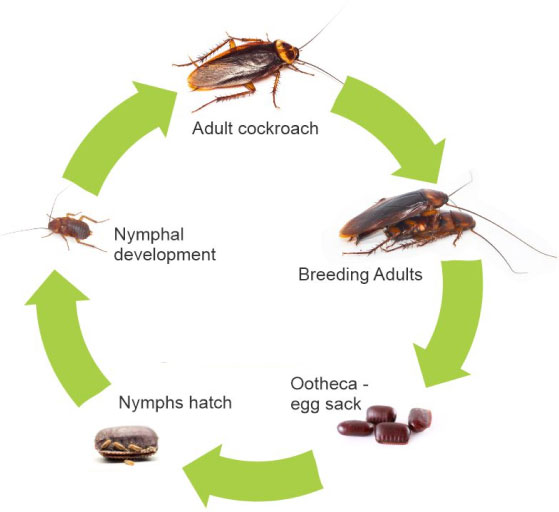
The cockroach life cycle
Cockroaches undergo an incomplete (or gradual) metamorphosis, with the juvenile stages being similar in appearance to the adult form, apart from the presence of wings. Female cockroaches produce an egg case (ootheca) after mating, and they either deposit this sometime before or immediately before the baby (nymph) cockroaches emerging.
According to the species involved, there are several juvenile stages lasting from six to twelve months. Adults can live from three to twelve months. Juveniles and adults live together in aggregations, with up to 75% of the aggregation consisting of juveniles.
All stages have similar mouthparts and feed upon identical foods. This makes it easier for us when we apply a baiting treatment.
Q&A about cockroaches for Brisbane homeowners
Why do cockroaches keep coming back after spraying?
Most sprays only kill the cockroaches you can see. If harbourage areas and breeding sites aren’t treated properly, new cockroaches will continue to emerge and activity returns.
Is cockroach treatment safe for my family and pets?
Yes. When applied correctly by a licensed professional, treatments are targeted and suitable for residential homes. Our technicians also provide clear re-entry advice for peace of mind.
Will the treatment reach cockroaches hiding in walls and cupboards?
Professional cockroach treatments are designed to target concealed areas where cockroaches live and breed, not just visible surfaces.
How long will a cockroach treatment last?
When done properly, treatments provide long-lasting control. Ongoing prevention depends on conditions around the home, which your technician will help identify.
Do I need to prepare my home before treatment?
Preparation is usually minimal. We’ll let you know in advance if any areas need to be cleared to ensure the best result.

5 star service
We pride ourselves on delivering quality customer service and support. As a family owned and operated organisation we understand the importance of excellent service and customer care.
There is no such thing as a silly question – We strive to help
See what our clients are saying
We dance every time we get a Five Star review in the office!