
Targeted treatments designed to control silverfish properly and protect your belongings – not just provide short-term relief.
Conquer Termites silverfish treatment
-
Treats silverfish in cupboards, wardrobes, bathrooms and storage areas
-
Targets hidden harbourage zones, not just visible activity
-
Family- and pet-safe treatments when applied correctly
It’s part of our general pest control package – book now
Silverfish thrive in Brisbane’s humid homes and hide in hard-to-reach areas. Effective control means treating where they live – not just where you see them.
Got a silverfish problem – what to do?
When silverfish start appearing out in the open, it often indicates there is already established activity within the home. Silverfish prefer dark, concealed spaces such as wall voids, cupboards, and under bathroom cabinetry, which is why they’re often noticed late.
In some cases, silverfish may also begin damaging stored items such as clothing, books, magazines, and paper goods, particularly those made from natural fibres.
While these items can’t be treated directly with insecticides, there are two practical steps homeowners can take to help stop further damage:
What you can do immediately
How the you can control silverfish
- Regularly vacuum every room.
- Pull out books and clothes to dust and check.
- Put all food, especially carbs and starches, in sealed containers.
- Don’t store piles of paper in a dark, damp area
- Regularly vacuum every room.
- Air the house regularly to reduce dampness and humidity – open windows.
These steps help protect your belongings – professional treatment is still required to address silverfish hiding elsewhere in the home.
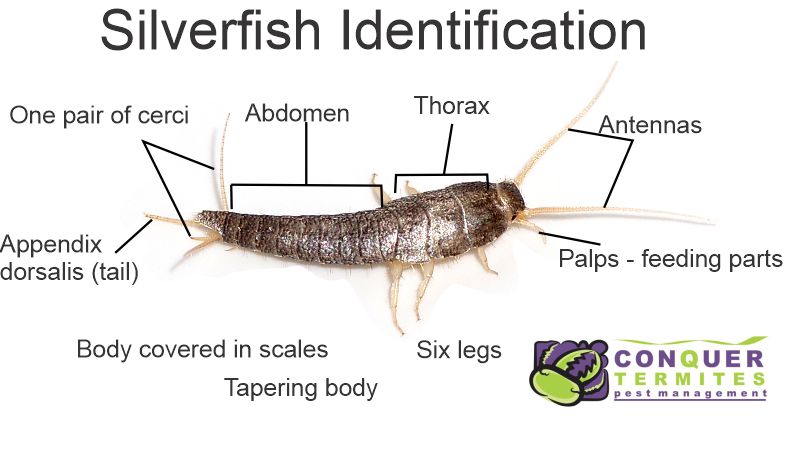
What do silverfish look like?
Silverfish are nocturnal insects typically 13–25 mm (0.5–1.0 in) long.[1] Their abdomens taper at the end, giving them a fish-like appearance.[2] The newly hatched are whitish but develop a greyish hue and metallic shine as they get older.[3] They have two long cerci and one terminal filament at the tip of the abdomen between the cerci.
A silverfish (Lepisma saccharina) is a small, primitive, wingless insect in the order Zygentoma. Its common name derives from the animal’s silvery light grey colour, combined with the fish-like appearance of its movements. The scientific name (L. saccharina) indicates the silverfish’s diet consists of carbohydrates such as sugar or starches.
Lifecycle of the silverfish
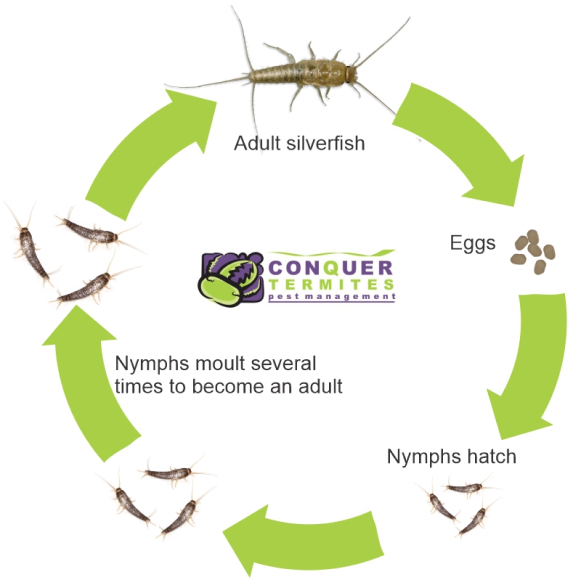
Silverfish go through a three-stage life cycle called gradual metamorphosis, whereas most insects have a four-stage life cycle (complete metamorphosis). The life cycle from silverfish egg to adult is three to four months.
Silverfish can lay eggs at any time during the year. The female lays groups in small batches, usually deposited in small crevices in dark places. The eggs take 2 – 8 weeks to hatch.
When the nymphs hatch, they are whitish in colour, and look like smaller adults. As they moult, young silverfish develop a greyish appearance and a metallic shine, eventually becoming adults after three months to three years.
Where to they live?
You find Silverfish inside, usually in dark, damp undisturbed areas. You rarely see them outside
What do they eat?
Silverfish love to eat anything made of carbohydrates such as sugar or starches. These include book bindings, carpet, clothing, coffee, dandruff, glue, hair, some paints, paper, photos, plaster, and sugar. Other substances they may eat include cotton, dead insects, linen, silk, leftover crumbs. So be aware your library of old books might be under attack!
*Silverfish can live for a year or more without eating if water is available.
Silverfish habitat
Silverfish love to eat anything made of carbohydrates such as sugar or starches. These include book bindings, carpet, clothing, coffee, dandruff, glue, hair, some paints, paper, photos, plaster, and sugar. Other substances they may eat include cotton, dead insects, linen, silk, leftover crumbs. So be aware your library of old books might be under attack!
*Silverfish can live for a year or more without eating if water is available.
Silverfish behaviour
Silverfish love to eat anything made of carbohydrates such as sugar or starches. These include book bindings, carpet, clothing, coffee, dandruff, glue, hair, some paints, paper, photos, plaster, and sugar. Other substances they may eat include cotton, dead insects, linen, silk, leftover crumbs. So be aware your library of old books might be under attack!
*Silverfish can live for a year or more without eating if water is available.
See what our clients are saying
We dance every time we get a Five Star review in the office!

When quality & experience matters
Conquer Termites has an experienced team of fully licensed and qualified technicians to provide termite detection and treatment solutions you can trust.
Contact us NOW to make a booking