
Signs that you have termites in a tree or stump
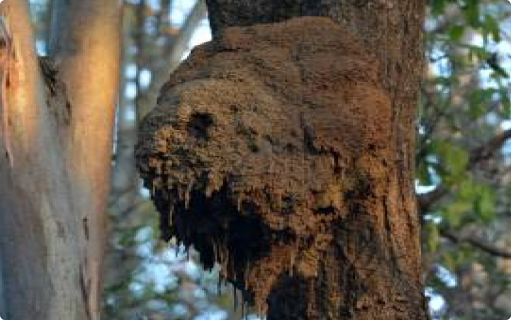
Arboreal nest
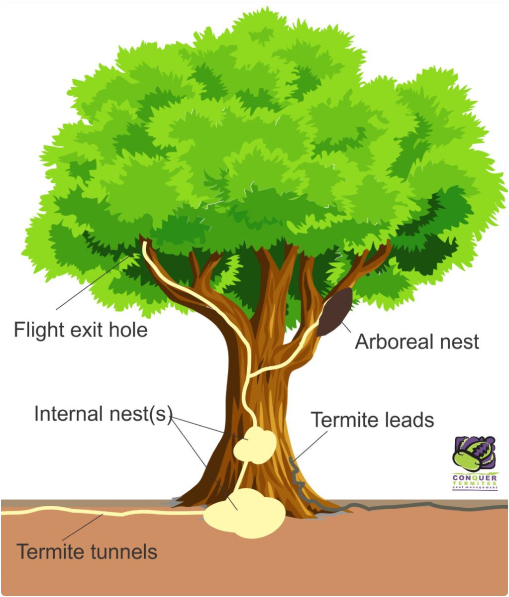
Some termite species build external nests on trees, known as arboreal nests. These are often an extension of the main nest when the primary nest inside the trunk has outgrown its space.
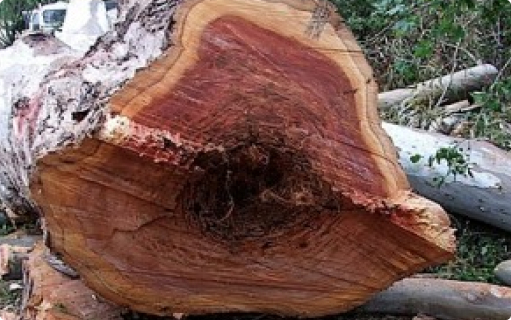
Tree trunk nest
Termites can hollow out the centre of a tree or stump and establish a hidden nest. They often leave the outside intact, allowing the tree to stand — until strong winds cause it to fail.
From these tree nests, termites forage outward in search of food, often finding your home. Most nests are located at the base of the tree or within the lower trunk, where the roots spread.
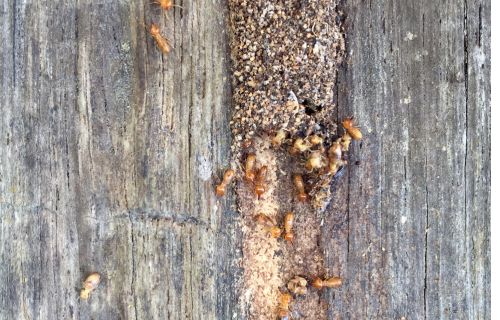
Mud leads/trails
Mud leads on the outside of the tree are the most visible signs you have termites affecting your tree. It doesn’t necessarily mean they are nesting inside the trunk, but it certainly indicates they operate in the area. When you see these leads, the termites come down from their arboreal nest high up in the tree to forage for food.
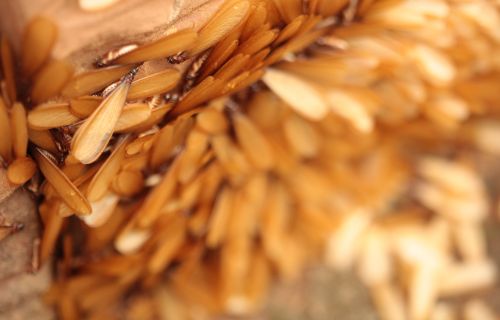
Termite flight exit gaps
You also might see “Flight Tube” exit holes higher up in a tree. This is where the reproductive winged termites exit to fly out to find another mate from another nest.
Means there is a nest inside the tree!
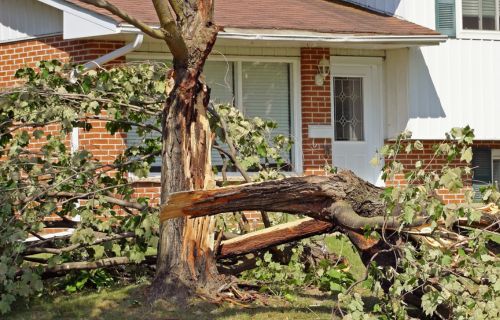
Fallen tree risk
Obvious sign!
Strong winds combined with a tree that has been compromised by termites can lead to serious damage to your home, vehicles, or neighbouring properties.
Important insurance warning:
Many insurance policies may not cover damage caused by a fallen tree if there is evidence of pre-existing termite damage within the tree.
How to treat a tress or stump that has live termites
Tree trunk with live termites
To treat live termites inside a tree, our technicians carefully drill small access holes into the trunk to locate internal hollow sections where termites are active. A borescope is then used to visually confirm termite activity inside the tree.
Once confirmed, a non-repellent transfer treatment (Termidor) is injected directly into the affected areas. This treatment is safe for the tree and often improves its long-term health by stopping termites from feeding on the heartwood. All access holes are sealed afterwards with plugs or sealant.
Tree stump with live termites
The best way to avoid termites in tree stumps is simply not to leave stumps behind. When a tree is removed, the stump should be ground out as soon as possible.
If live termites or an active nest are present, the stump should first be treated by one of our technicians using a non-repellent transfer treatment (Termidor) to eliminate the colony. Once treated, the stump can then be safely ground out.
Watch these videos to see how Conquer’s specialist technicians treat a tree and a stump
Why are trees so yummy for termites?
Trees are an ideal home for termites
Trees provide excellent nesting conditions for termites – particularly eucalyptus (gum trees), which dominate much of Australia’s natural landscape. The heartwood at the centre of the trunk is highly desirable to termites, while the outer sapwood and growth rings are generally less attractive.
For termites, trees act like a continuous food source rising from the ground.
Tree stumps are especially attractive once they begin to age. As the timber breaks down, it becomes highly susceptible to termite activity. For a colony, stumps offer both an abundant food supply and a protected environment to establish and expand a nest.
Don’t panic – it’s normal to find termites in a tree
It’s completely normal for termites to live in trees and stumps. This relationship has existed for millions of years and is part of the natural environment.
And yes – that’s even how the didgeridoo was traditionally formed.
Will termites damage or harm the tree?
Termites are highly efficient engineers and will often stop feeding before they completely compromise a tree’s structural integrity. In many cases, an infested tree can appear healthy from the outside.
However, when termite activity is combined with age, internal decay, or fungal rot, the overall strength of the tree can be significantly reduced. This hidden weakening is the primary reason termite-affected trees are more likely to fail or fall during strong winds or storms.
Some common questions

See what our clients are saying
Satisfaction comes when we solve a customer’s problem